
Sex Offender Checks in Orangeburg County
The South Carolina Public Sex Offender Registry, often called SORT, is the main public channel for an Orangeburg County sex offender search. SLED manages the statewide system. The Orangeburg County Sheriff's Office supplies and verifies local registration information, so the two agencies share the work. There is no separate county registry database documented in the research. Start with SORT for a public search, then call the sheriff when a local registration question cannot be resolved from the profile.
The official SORT entry screen shows the conditions that must be accepted before a search. The SLED registry source is pictured here.
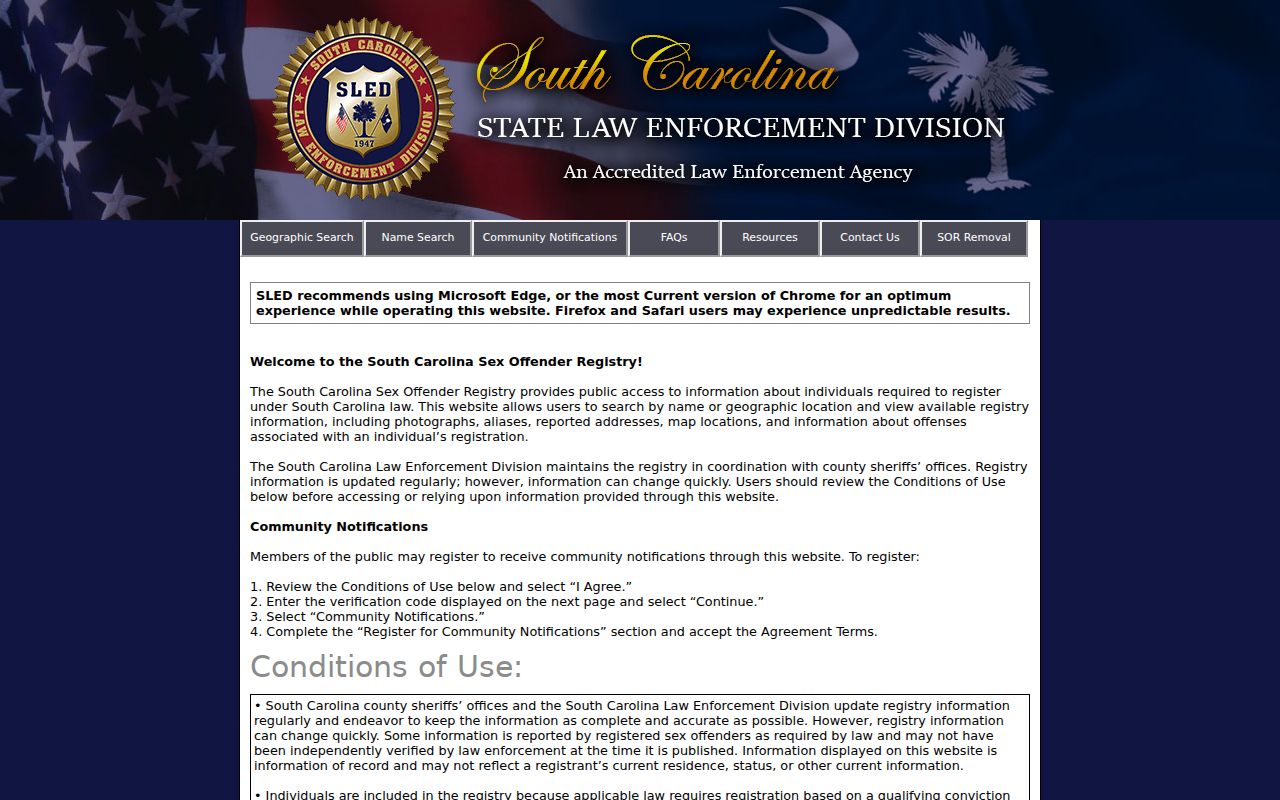
That gate matters because it states the limits and lawful purpose of Orangeburg County registry information before the captcha opens the search tools.
Orangeburg County SORT Entry Gate
SORT requires an Orangeburg County searcher to accept its Conditions of Use, complete a verification code, and choose Continue. No account or fee is required. SLED recommends a current version of Chrome or Edge and warns that Firefox or Safari may behave in an unpredictable way. If the screen does not advance, check the captcha and browser first. Do not assume the registry is down merely because a stored link or an old session fails.
Once admitted, the public navigation offers a Name Search, Geographic Search, Community Notifications, resources, contacts, and removal information. Each Orangeburg County tool answers a different question. A name search helps when the person is known. The geographic route helps with Orangeburg County community awareness around a place. Notifications are a separate signup process. SLED states that people registered for notifications in the former system must register again in the current one.
How to Search the South Carolina Public Sex Offender Registry (SORT)
Keep the first Orangeburg County registry search broad. A spelling difference or alias can hide a relevant result. The research could confirm the public routes below, but the post-captcha labels and distance choices were not available in a stable anonymous session. No radius value should be assumed.
- Open SORT, read the conditions, choose “I agree,” enter the captcha, and select Continue.
- Choose Name Search when the person is known, or Geographic Search when reviewing an Orangeburg County area.
- Compare the result with more than one identifier, including the legal name, aliases, photographs, and reported address.
- Open the full profile and read the offense and registration details before drawing any conclusion.
| Control | Type | Required | Use |
|---|---|---|---|
| Conditions of Use | Acceptance | Yes | Agree before any public registry route opens |
| Verification code | Captcha | Yes | Enter the code and select Continue |
| Name Search | Search page | No | Use the official person-name route |
| Geographic Search | Map page | No | Review the official location-based route |
| Community Notifications | Registration workflow | No | Accept terms and complete a fresh signup |
The official SORT name-search route appears in this captured view.
The captured page confirms the named route without suggesting search fields that SLED keeps behind its active session gate.
Orangeburg County Name or Map Search
A name and a map serve different Orangeburg County needs. Use the name route to confirm whether a known person has a public SORT entry. Use Geographic Search to review reported residences within the map tools that the live portal provides. A map marker reflects a reported registry address. It is not a promise that a person is at that spot now, and it should not be treated as real-time tracking.
SORT's official geographic-search route provides the location layer shown here.
The geographic screen is useful for awareness, while the profile and registry contact remain the better sources for identity and record questions.
For a person who may have records in more than one state, use the National Sex Offender Public Website. NSOPW searches participating jurisdictions and adds a cross-state layer. It does not replace the Orangeburg County sheriff's role or SLED's source record.
Inside a Registry Profile
A public SORT profile can show several photographs over time, legal names and aliases, reported addresses, a mapped residence, and registering offenses with statute references. South Carolina law also requires law enforcement to collect more data, such as physical traits, birth date, fingerprints, palm prints, vehicles, marks, employment or school information, and internet identifiers. Do not assume each nonpublic field will appear on the public Orangeburg County profile.
| Name & Aliases | Legal name and reported alternate names used to distinguish records |
|---|---|
| Photos & Description | Public images over time and identifying traits that SORT displays |
| Registered Address | Reported residence and map information, not a live location guarantee |
| Offense & Statute | Qualifying offense information and the linked legal basis for registration |
| Tier Information | State tier relevant to the statutory removal path |
| Record Limits | Some data collected by law enforcement may not be public on the profile |
An Orangeburg County listing reflects a qualifying conviction or adjudication. It does not measure current dangerousness. Match several profile facts and contact SLED about an apparent error rather than making a public accusation.
Orangeburg County Registry Notifications
Community Notifications are built into SORT as a distinct registration workflow. An Orangeburg County resident must first accept the registry conditions and pass the captcha, then open the notification tab and complete the current terms and signup. A prior subscription from the former registry system does not transfer. Register anew if alerts are part of a family or neighborhood safety plan.
The Department of Justice national registry source is shown below as the official cross-state option.
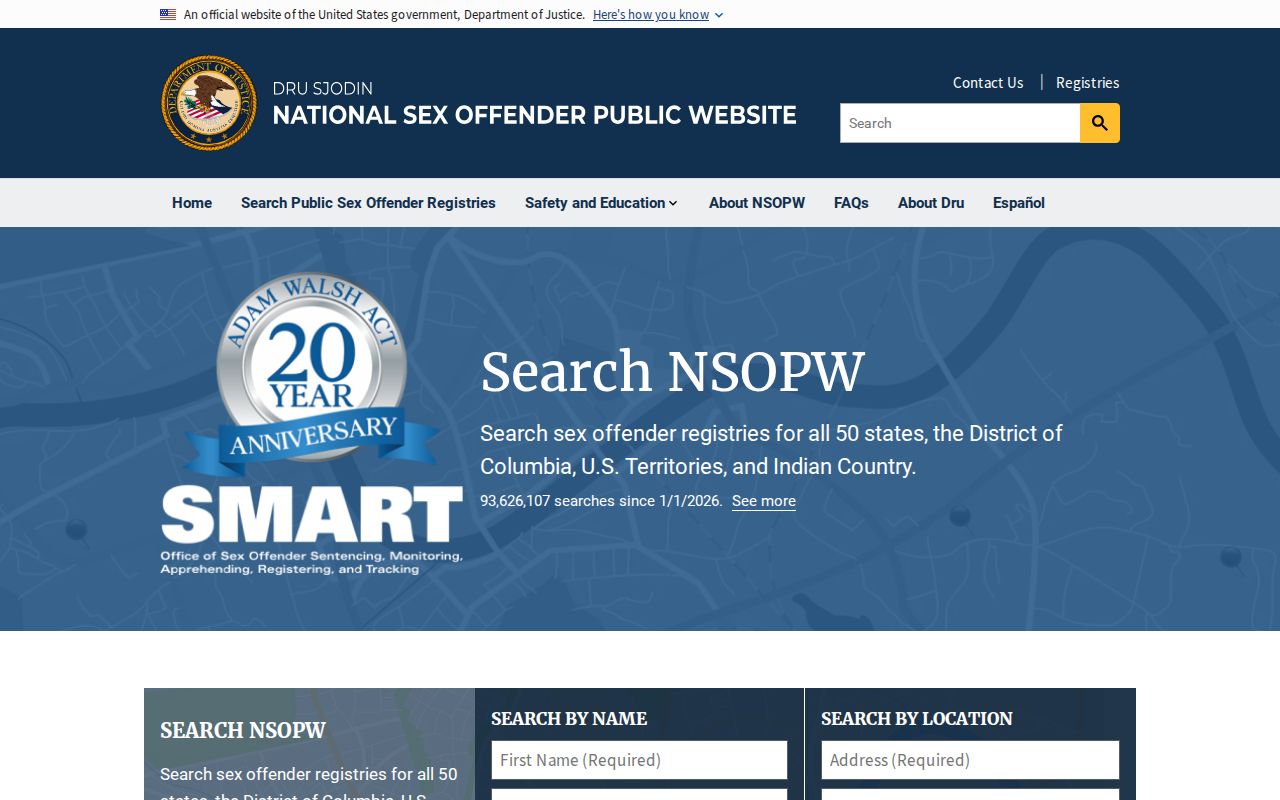
NSOPW is most useful when an address history crosses state lines, while SORT remains the direct South Carolina source for Orangeburg County entries.
Notifications support awareness. They do not replace the need to read the linked profile, confirm which address was reported, and use emergency services for an immediate threat. Routine questions about Orangeburg County registration should go to the sheriff, while record corrections go to SLED.
South Carolina Registration Levels and Requirements
South Carolina's state tier controls the earliest route for removal, but federal SORNA tier rules affect verification frequency. Those are not the same scale. SLED says adult registrants generally report twice each year for life unless removal is granted. A person treated as federal Tier III verifies every 90 days for life. Registration continues during any review.
| South Carolina tier | Earliest relief path | Key limit |
|---|---|---|
| Tier I | SLED administrative request after the statutory 15-year measure | Registration continues while SLED reviews eligibility |
| Tier II | SLED administrative request after the statutory 25-year measure | Eligibility facts and the record are verified |
| Tier III | General Sessions motion after the statutory 30-year measure | No administrative termination route |
The SLED registry and removal guidance is the controlling official starting point for current forms.
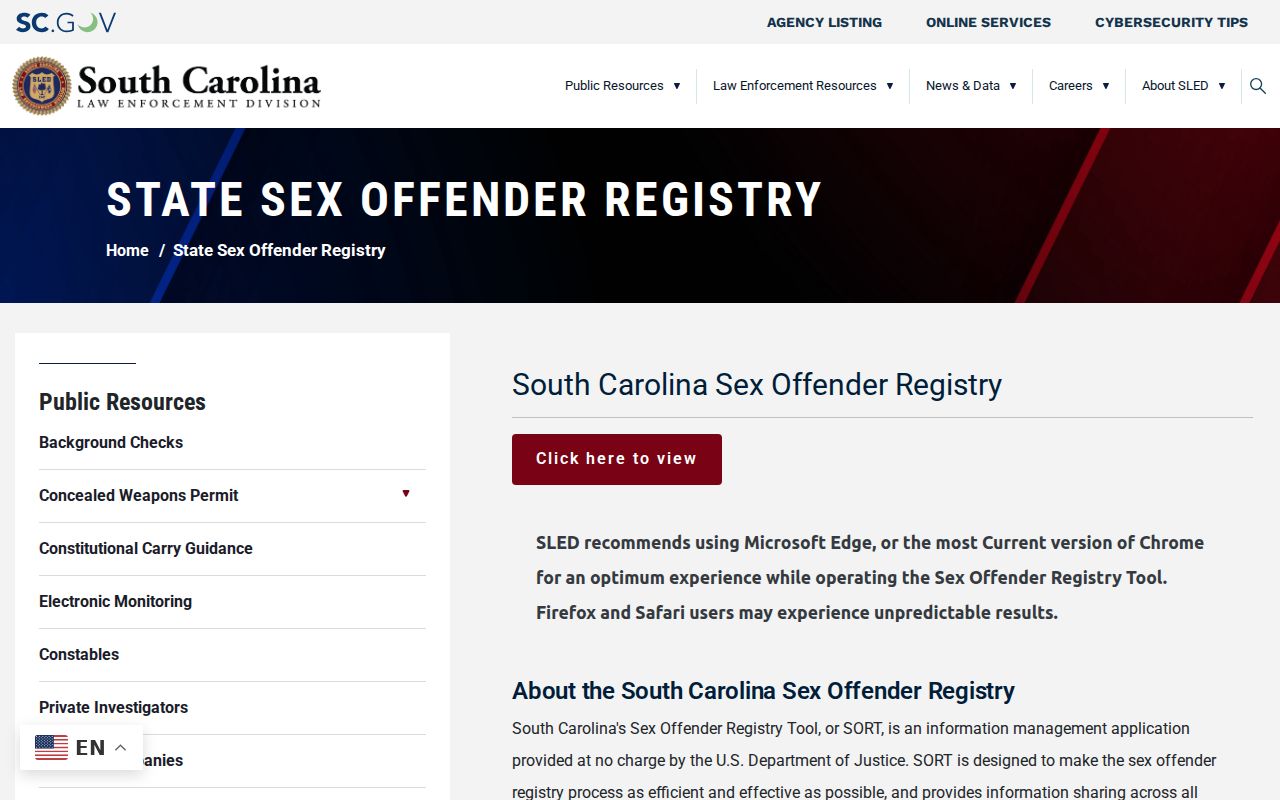
This source helps separate the public search from the much narrower statutory process for ending a registration duty.
Orangeburg County Registry Removal Requests
Removal is not an erase button on an Orangeburg County search result. SLED's packet requires a paper application, two recent FD-258 fingerprint sets, a $250 nonrefundable cashier's check or money order, sentencing and disposition records, and official proof that required treatment was completed. Personal checks are not accepted. A prior failure-to-register conviction within ten years or a new sexual offense after registry placement can block eligibility under the published guidance.
SLED notifies the original prosecuting agency. The statutory review may take 120 days, and a denial generally prevents another request for five years. Tier III relief proceeds by motion in General Sessions rather than the Tier I or Tier II administrative path. The rules changed in May 2025 for Tier I and juvenile matters, which makes the current SLED packet more reliable than an old summary.
Registration and verification duties continue while a request or motion is pending. A favorable court result in another type of case does not by itself remove the SORT listing.
Community Notification and Lawful Use
Orangeburg County registry information is published for safety planning and community awareness. Read it with care. A recorded address can change, a person can share a name, and a profile is not a live report of conduct. If there is an immediate threat, contact law enforcement. For an apparent noncompliance issue, provide the sheriff or SLED with facts and let the agency investigate.
The registry provisions in South Carolina Code Title 23, Chapter 3 govern publication and misuse. The official statutory source is pictured here.
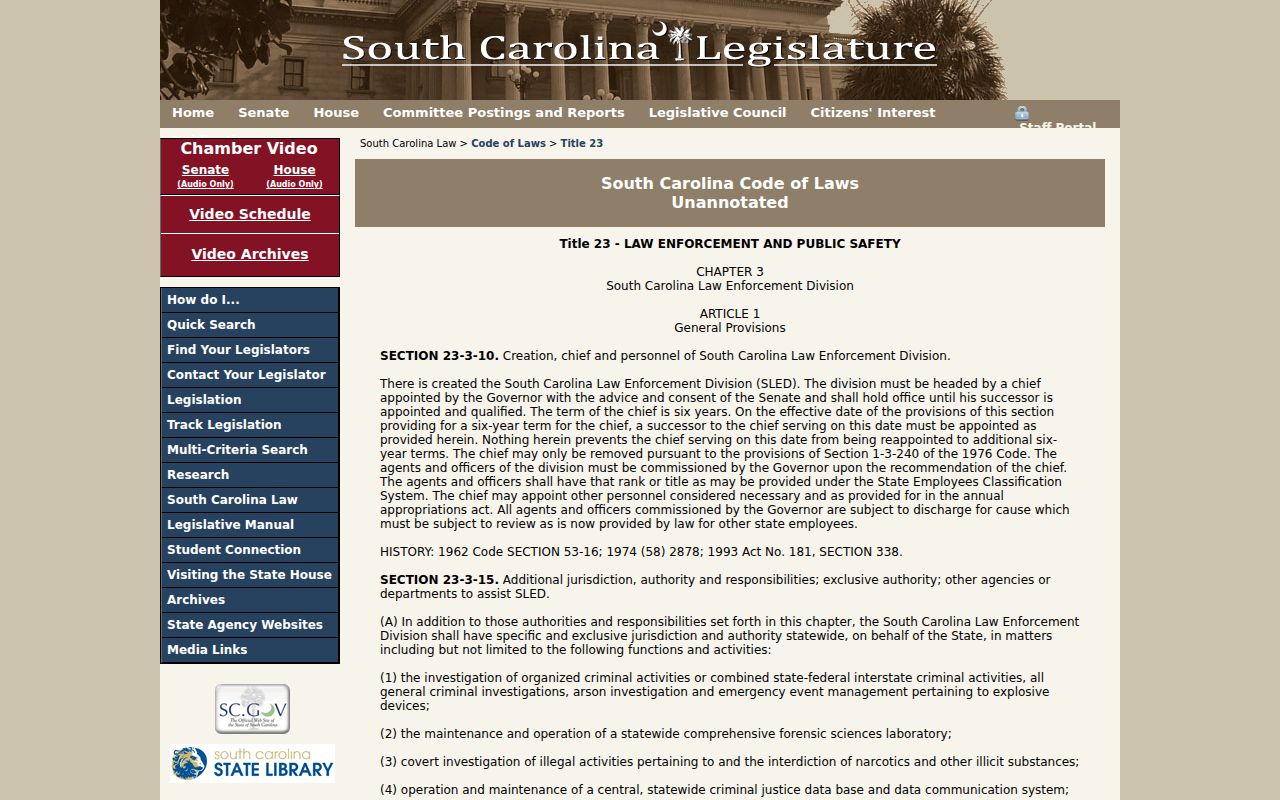
The law supplies the public-access rule and the added punishment for using registry information to commit another offense.
Do not misuse registry data: Under S.C. Code §23-3-510, using registry information to commit another offense can add up to $1,000 and six months for a misdemeanor, or up to five years for a felony. Never harass, threaten, injure, discriminate against, or confront a registrant or household.